Onboarding completionReducing drop-off throughout the regulated sign-up journey.
← All work
Cooler
Climate Fintech · Lead Design · Full Launch
Cooler
Future
Sustainable investing was crowded with greenwashing and confusing financial jargon. Cooler Future set out to build a more transparent alternative. I led design from day one, shaping the research, product experience, website and launch.
€20
Minimum investment,
open to almost anyone
open to almost anyone
2
Distinct user types with
fundamentally different needs
fundamentally different needs
3
Surfaces designed: app,
website, design system
website, design system
The brief
Green investing had a
credibility problem.
It is easy to label a fund as sustainable. It is much harder to stand behind that claim when someone looks closer. Many products relied on financial jargon and vague impact statements that were difficult for people to verify.
Cooler Future took the opposite approach, making transparency the foundation of the product. The goal was to show people exactly what was in their portfolio, what was excluded, how sustainability credentials were verified, and what their money was actually supporting, including the complexity and trade-offs behind those decisions.
I joined before anything had been designed. The scope covered the mobile app, marketing website, and the design system connecting both experiences. The first challenge was understanding who we were building for, what they needed to trust the product, and what information would help them make confident investment decisions.
Research came first, and it shaped everything that followed.
Research
Two very different users,
looking at the same screen.
Interviews, diary studies and card sorting across both segments revealed something the original brief had overlooked: this was not one audience with one set of needs. It was two groups approaching the same product with completely different questions.
Understanding what each group already knew, what they doubted, and what would build or break trust became the foundation for the product strategy. Research did more than inform the interface; it changed how the product itself needed to communicate.
First-time investors
Curious but overwhelmed
Interested in making better choices, but unsure where to start. They arrived with questions like “Is this actually better than leaving my money in the bank?” The product needed to answer that through the experience itself, rather than relying on separate education pages.
Existing investors
Skeptical and evidence-driven
Already investing and familiar with the promises of sustainable finance. They had seen vague claims before and wanted proof: “How is this actually different from what I already have?” For this audience, transparency was not just a brand value. It was the reason to trust the product.
Onboarding: removing friction without removing rigour
Opening a regulated investment
account is legally complex.
It doesn’t have to feel that way.
New users had to open a German depot account as part of signup, including identity verification, tax information, KYC checks, and regulatory disclosures. These steps were mandatory. The challenge was making them feel like the minimum necessary effort, not a barrier to getting started.
Anything that could be postponed was postponed, and anything not legally required was removed. Every step was introduced with clear context, users knew what information they needed before reaching it, and progress remained visible throughout.
After registration, users moved straight into fund selection, choosing themes aligned with their values before committing any money: Smart Energy, Clean Water, Circular Economy, and Forestry & Timber. The investment journey started with personal conviction, not financial complexity.
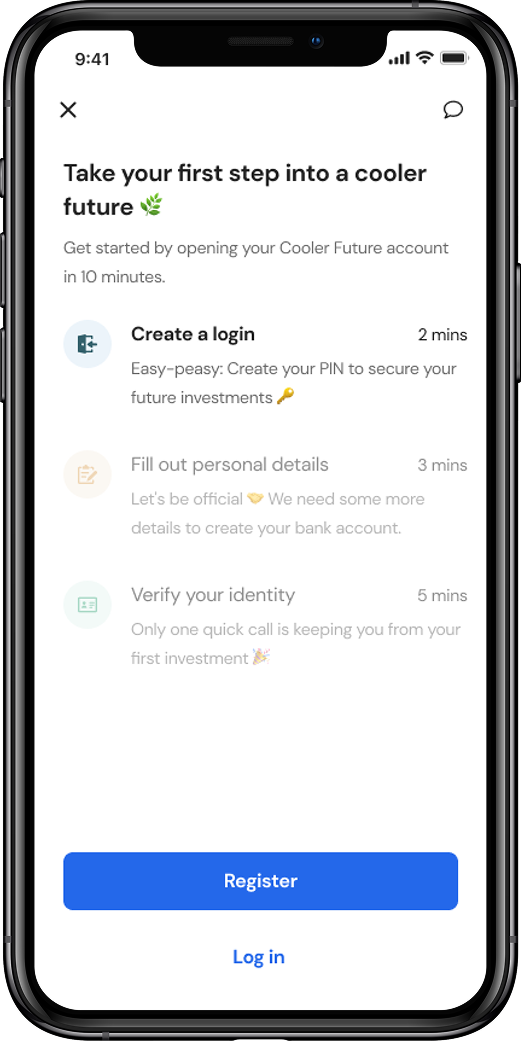
Register in 10 mins
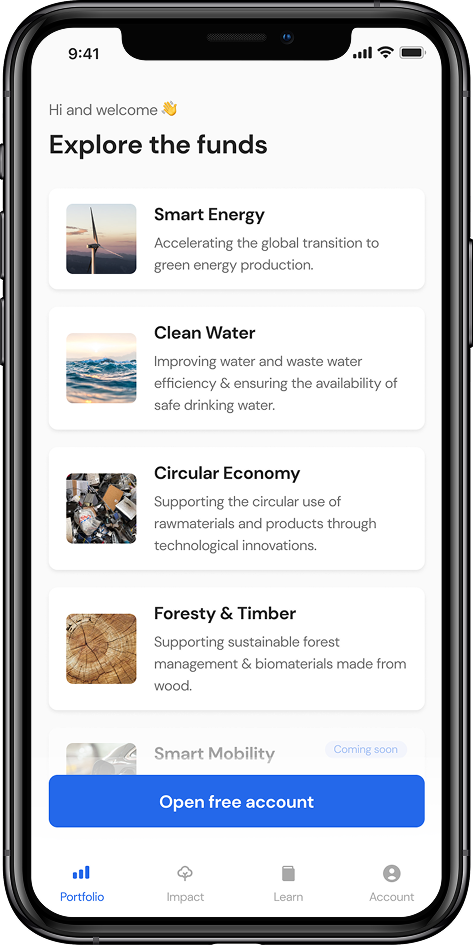
Choose your themes
Your portfolio
The portfolio experience
Clean enough to trust
at a glance. Deep enough
to explore.
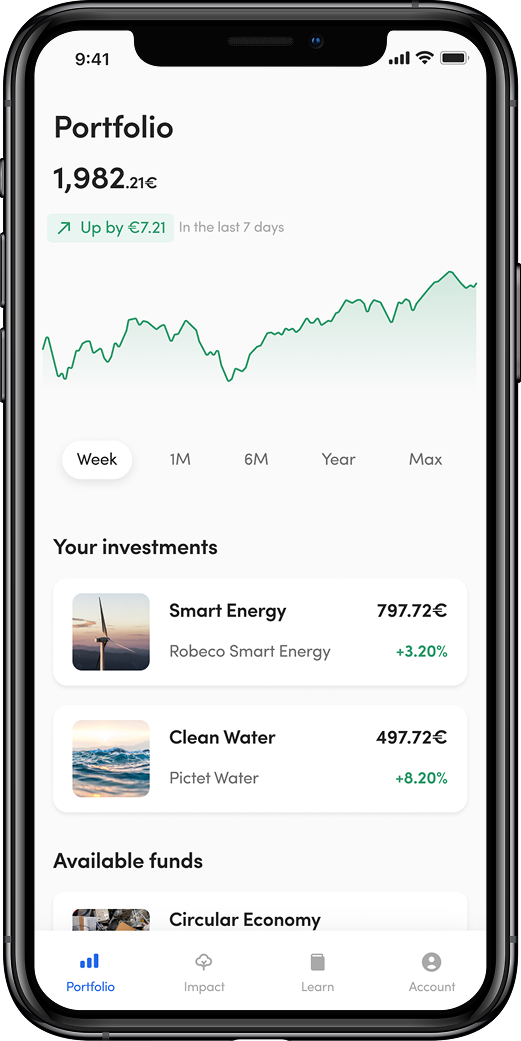
The portfolio screen became the product’s home, the place users returned to most often. Its first job was simple: show how an investment was performing. Its second was more important: connect that performance to the environmental impact behind it, with transparency rather than marketing.
For first-time investors, the portfolio made sustainable investing feel tangible by showing both financial returns and measurable impact in one place. For experienced investors, it provided the evidence they expected: fund performance, sector allocation, exclusion criteria, and clear explanations of how each fund’s sustainability credentials were assessed.
Every layer of the experience was designed to answer the same question: why should I trust this investment?
Portfolio overview
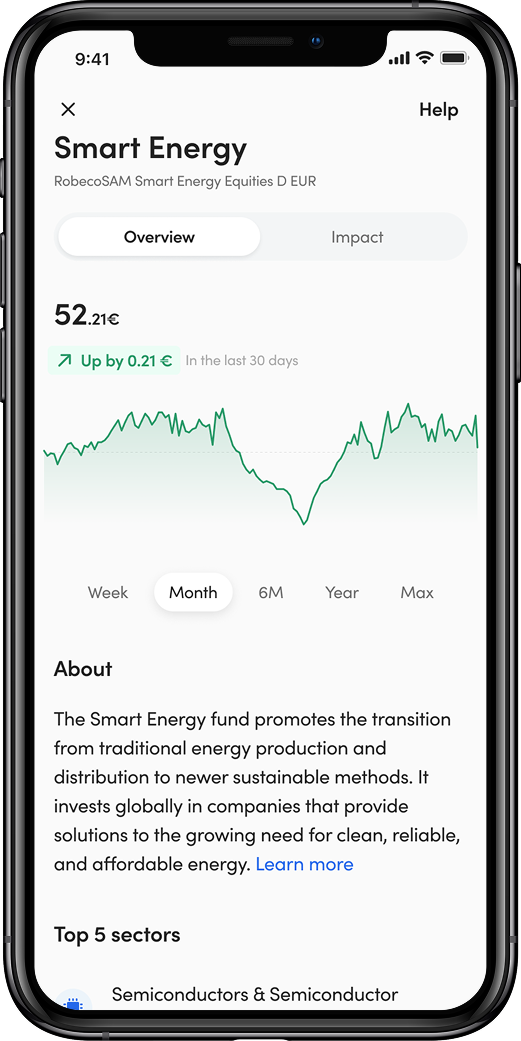
Fund detail and impact
The impact problem
Designing for honesty,
not certainty.
Communicating the environmental impact of an investment was the hardest design challenge on the product. Regulators, data providers and sustainability frameworks all measured impact differently, making it difficult to present information that was both meaningful and defensible.
The link between a €500 investment and a real-world outcome is rarely direct. Capital moves through funds, asset managers and underlying holdings, making precise attribution almost impossible. Rather than oversimplifying that complexity, I explored several approaches, including goal-based impact summaries, supported project feeds, and carbon dashboards with real-world comparisons.
The work remained exploratory, but it established an important design principle that influenced the product: show only what the data can genuinely support, provide the context needed to interpret it, and never overstate the impact.
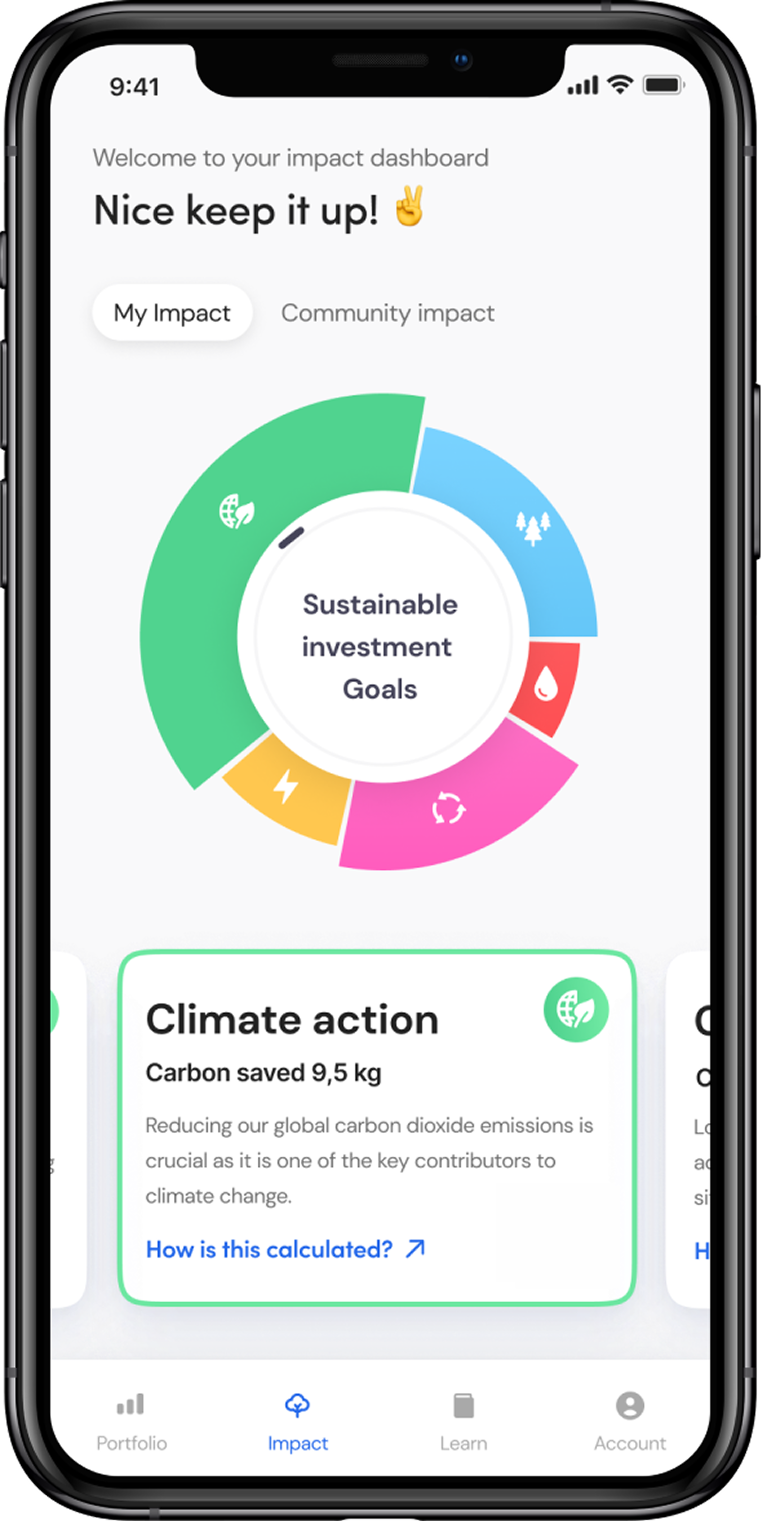
Goals: breaking impact down by investment theme
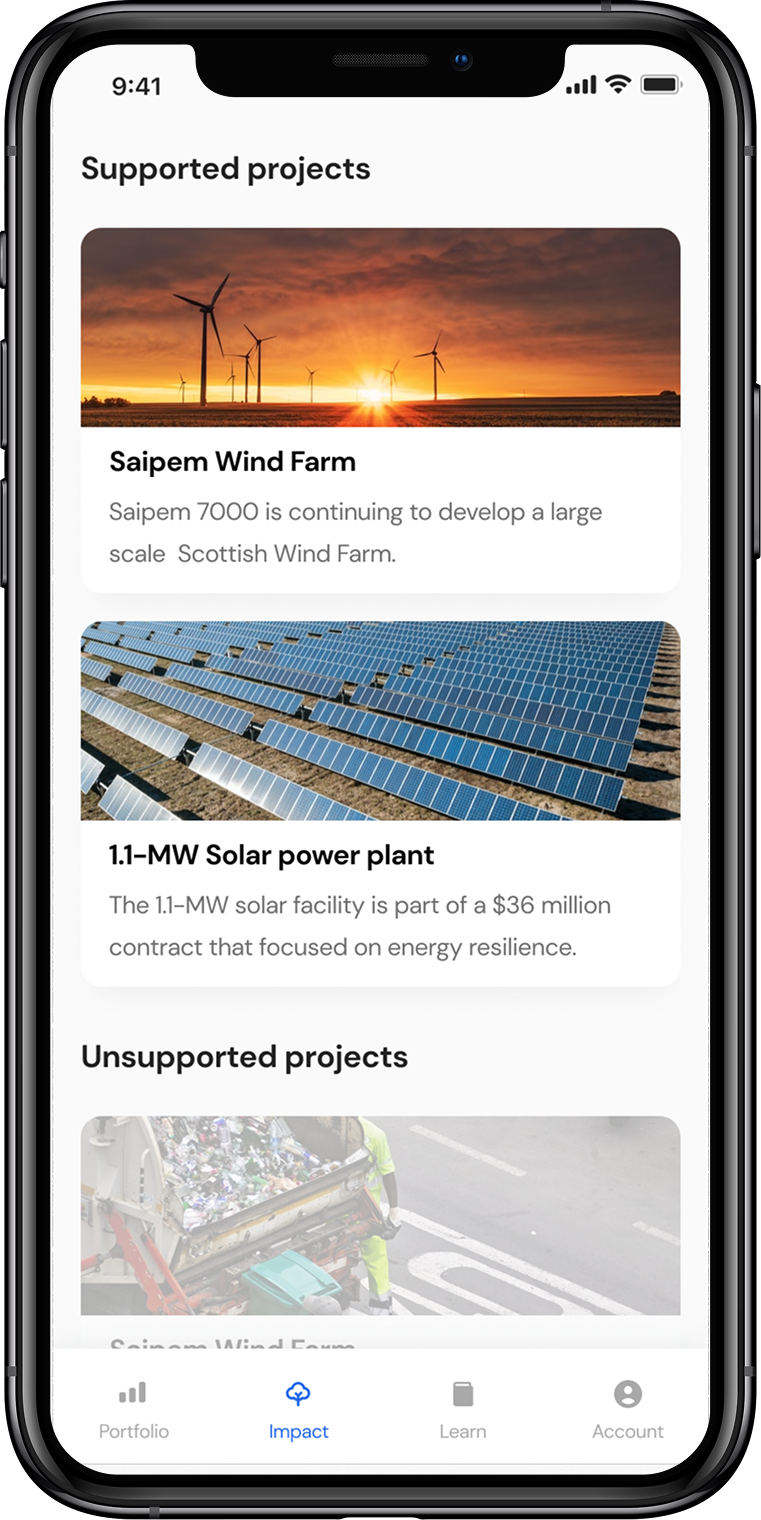
Projects: showing what funds are actively supporting
Education
Trust was the barrier.
Understanding was
how we got past it.
Trust was the biggest barrier for both user groups, but for very different reasons. First-time investors lacked confidence in the subject. Experienced investors lacked confidence in the industry. The Learn section was designed to meet both needs, introducing the fundamentals of sustainable investing for newcomers while providing deeper explanations of fund methodology, sustainability ratings and portfolio construction for more experienced investors.
Content was organised into self-paced courses, with progress tracking and the ability for users to suggest topics they wanted to explore next. Rather than treating education as a marketing tool, it became part of the product experience itself, helping people understand not only where their money was invested, but why. The goal was simple: give users enough confidence to move from learning to making their first investment.
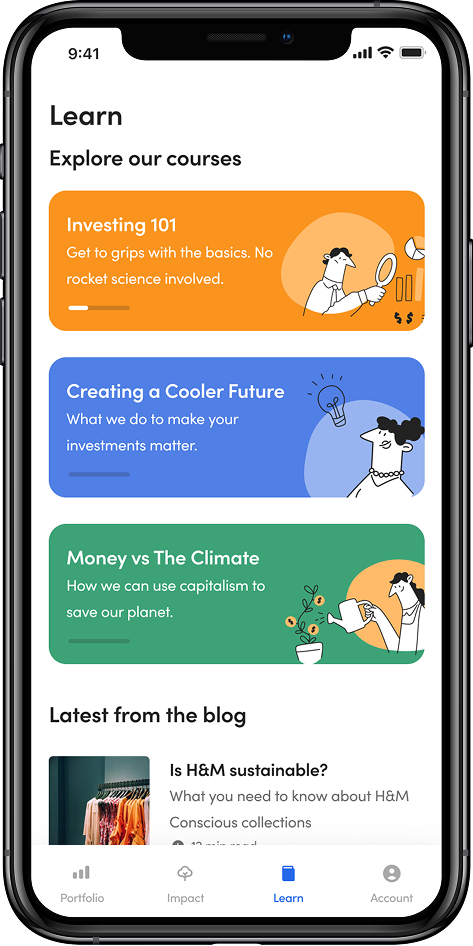
Learn: courses and sustainability content
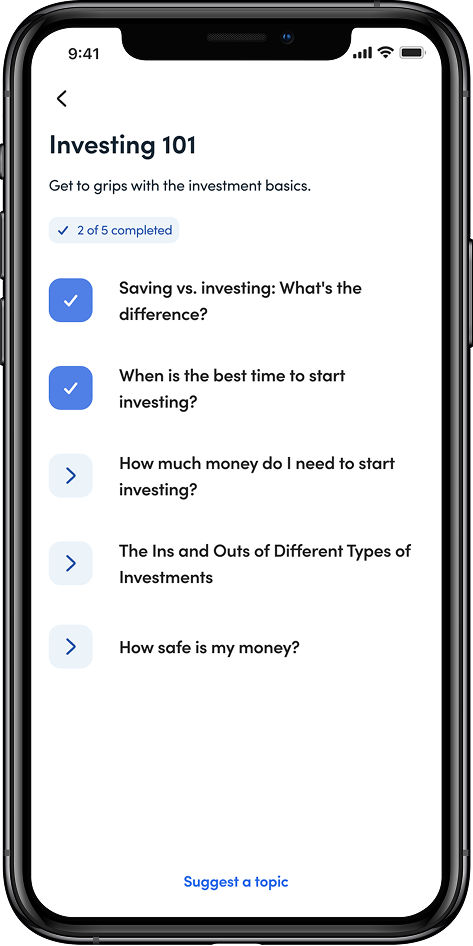
Investing 101: progress tracked lesson by lesson
Marketing website
Two surfaces.
One world.
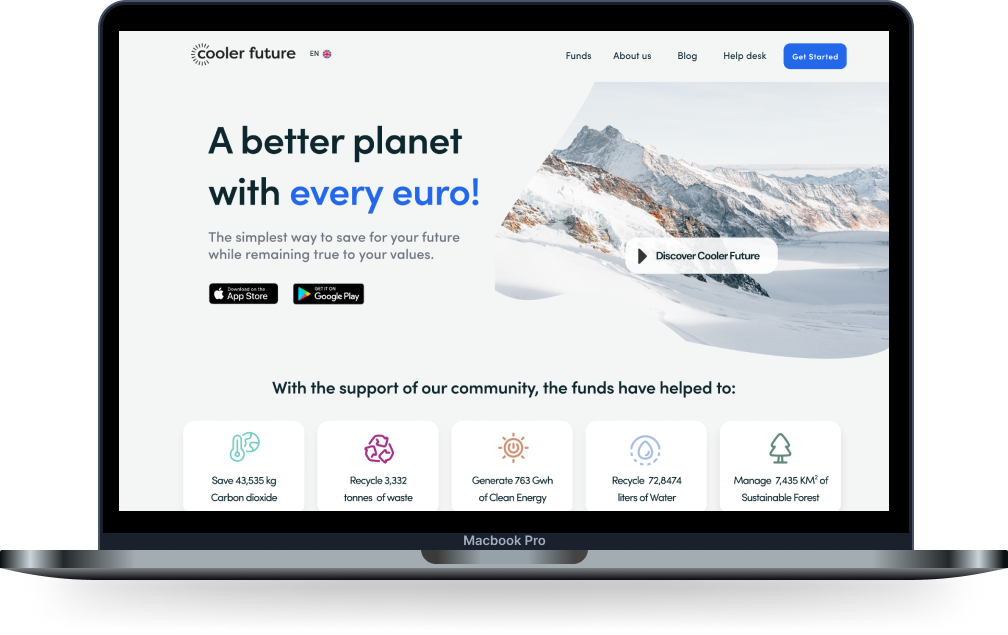
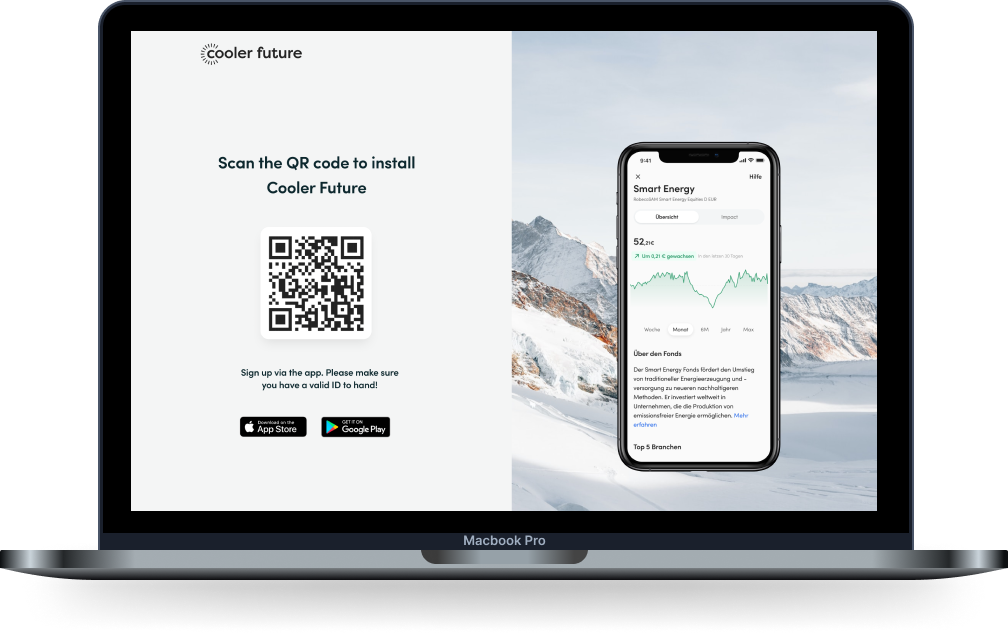
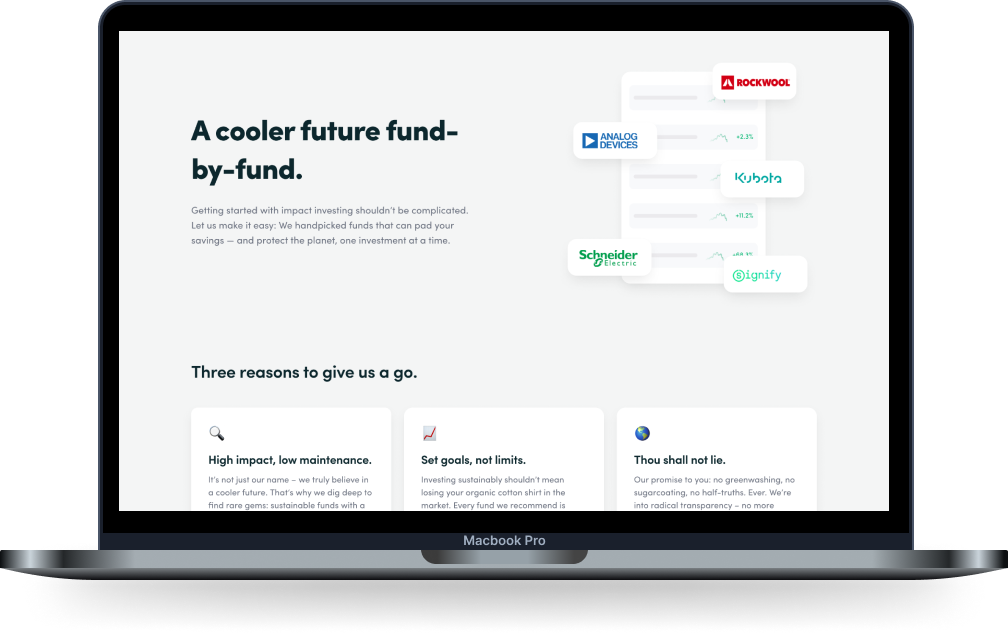
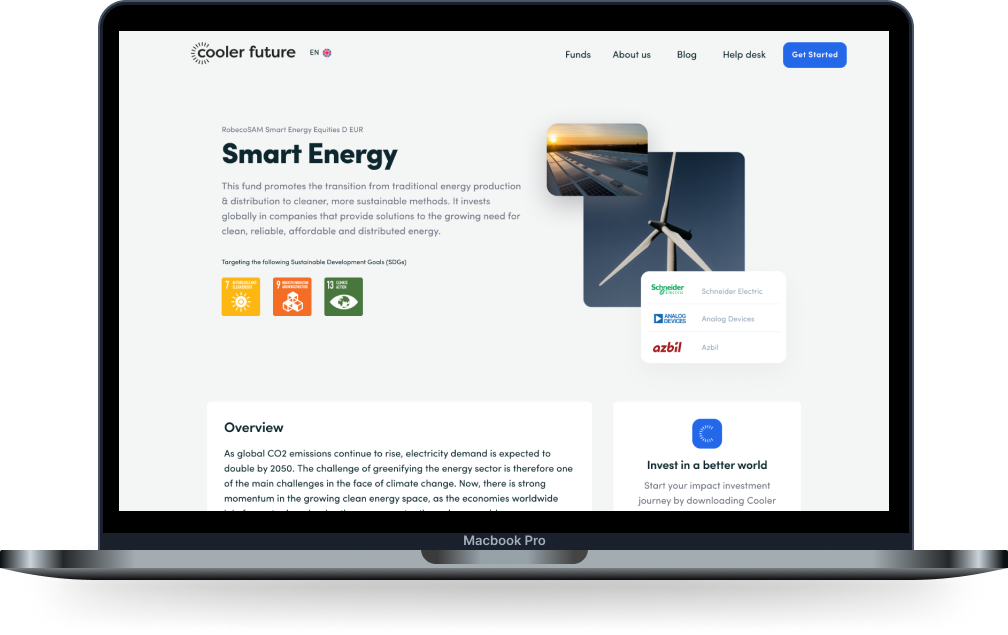
Alongside the mobile app, I designed the marketing website, often the first touchpoint for potential users. It needed to establish the same sense of transparency and credibility people would later experience inside the product.
The visual language, messaging and trust signals were designed as a single system across both experiences. For a product built on trust, any disconnect between the website and the app would have undermined the promise before users had even opened an account. The shared design system was what held the two together, from first impression through to first investment.
Product metrics
How success was defined.
First investmentHelping more users move from account creation to investing.
Trust in impact dataMaking sustainability claims transparent and easy to understand.